CCOM Students Build Lasting Community Research Partnership
Student-led collaboration with CommunityHealth improves colorectal cancer screening
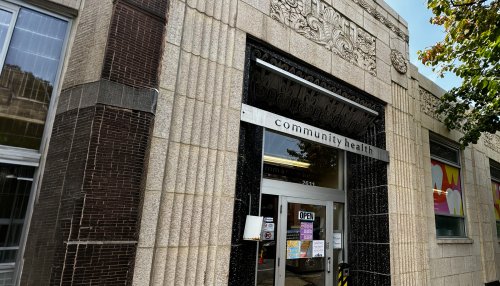
CommunityHealth in Chicago has an ongoing partnership with Midwestern University students on research aimed at improving colorectal cancer screening and preventive care for uninsured patients.
Every year, Emily Hendel receives a simple email from Midwestern University medical students.
It contains little more than a list of names.
Those names belong to the next group of Chicago College of Osteopathic Medicine (CCOM) students who will continue a research study examining whether multilingual text message reminders can increase colorectal cancer screening among uninsured patients.
For Ms. Hendel, Director of Clinical Services at CommunityHealth, Chicago’s largest volunteer-based free clinic, that annual email represents more than a change in student leadership. It reflects a partnership that has produced meaningful research while improving preventive care for thousands of patients.
Since 2021, each group of CCOM students has built on the work of the last, expanding the study, mentoring new researchers, and helping translate findings into better patient care.
A Partnership Built on Community Needs
The project began with a simple question: How could Midwestern University students use research to make a meaningful difference for CommunityHealth patients?
The answer became a student-led study where patients who received fecal immunochemical test (FIT) kits, an at-home screening test that detects hidden blood in the stool, received reminder messages every two weeks in their preferred language. Students then analyzed whether the reminders increased test completion and return rates.
“We have about a 75% return rate on those kits right now, if not sometimes higher,” Ms. Hendel said. “The students are a big part of that, making sure the messages go out.”
For CommunityHealth’s approximately 4,500 patients, the reminder program provides an affordable way to increase colorectal cancer screening while helping the clinic identify patients who need follow-up testing and prioritize limited colonoscopy resources for those at greatest risk.
“One thing that stood out to me was seeing how something as simple as a text message could make a difference,” CCOM medical student Justin Chen (CCOM ‘27) said. “People are busy, and preventive screening is often not at the top of their priority list. A quick reminder can help bring it back to their attention and encourage them to take that next step.”
Students Teaching Students
Each year, senior CCOM students recruit new team members, interview applicants, train incoming researchers, and pass along years of data. Faculty mentors provide guidance, but students oversee much of the project’s day-to-day work, ensuring it continues to grow rather than starting over with each graduating class.
“The students have created a self-governing group. They recruit new members, train the next class, and keep the project moving forward. Everybody has a role, but no one person has to carry the entire project,” said Ann Impens, Ph.D., Director of Clinical Research Services at Midwestern University. “What makes this project unique is that the students have created a model that allows it to keep growing."
Justin joined the project during his first year of medical school after learning about it from older students. What began as a role supporting patient outreach gradually became an opportunity to contribute to every stage of the research process.
"The project has evolved from simple patient outreach and data collection into conference presentations, quality improvement initiatives, manuscript development, and now expansion to the Arizona campus," Justin said. "One accomplishment I am especially proud of was learning coding and statistical analysis. Seeing that work contribute to a manuscript and helping create a foundation that future students can continue to use has been incredibly rewarding."
Looking Ahead
The research continues to evolve with each new class of students.
Katherine Woller (CCOM ’29) joined the team last winter and is now examining what happens after patients receive a positive FIT screening result. Her research focuses on whether patients complete recommended follow-up colonoscopies and identifying the barriers that may prevent them from receiving that care.
“I’ve really appreciated everything the previous student team has done,” Katherine said. “They’ve been incredibly generous with their time, whether that’s answering questions, helping me brainstorm ideas, or encouraging me in my own project. It’s been a great example of the collaborative environment that this project has created, and it’s something I hope to continue for future students as well.”
The success of the colorectal cancer screening initiative has opened the door to future collaborations.
“I think research really allows you to pull back a little bit and look at how care is being provided in the bigger picture,” Ms. Hendel said. “It allows you to look at the data and learn where there are opportunities to make improvements in how healthcare is being provided.”
Building on the success of the text message reminder program, CommunityHealth is now exploring additional research projects with CCOM students focused on preventive care, including outreach for patients with uncontrolled diabetes and hypertension, as well as reminders for breast and cervical cancer screenings. The goal is to better understand which approaches help patients return for the care they need.
According to Justin, "Every student cohort leaves the project a little better than they found it."