Midwestern University Connects Community Through Aphasia and Stroke Awareness Event
Students, patients, and families share experiences and resources to support stroke recovery
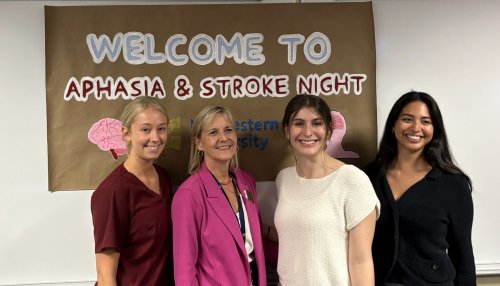
Students and faculty shared information and resources with the community during the 11th annual Aphasia & Stroke Awareness Night. From left: Speech-Language Pathology student Corinne Wing; Judith Ball, M.S., CCC-SLP, Clinical Professor; and Speech-Language Pathology students Jackie Jung and Alexa Florendo.
Individuals living with aphasia and their families shared personal perspectives at Midwestern University's 11th annual Aphasia & Stroke Awareness Night, offering insights into their experiences and connecting with future healthcare professionals.
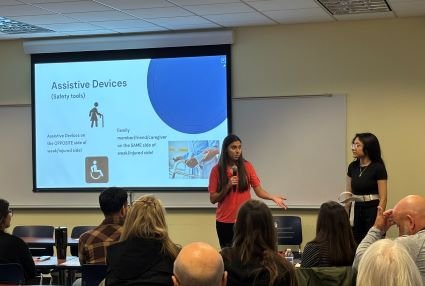
Presented by the Speech-Language Pathology Program on October 14 at the Midwestern University Clinic in Downers Grove, the event welcomed more than 100 attendees and featured 21 student presenters.
Understanding Life with Aphasia
“Most importantly, we wanted people to hear directly from those living with aphasia and recognize the value of their experiences and stories,” said Corinne Wing, a Speech-Language Pathology student in the College of Health Sciences, Class of 2027.
As the student event coordinator, Corinne helped organize the evening, coordinate volunteers, and prepare with speakers alongside Judith Ball, M.S., CCC-SLP, Clinical Professor, Speech-Language Pathology Program.
Ms. Ball emphasized the importance of giving students opportunities to learn through community engagement. "One of the most rewarding aspects of my work is supporting future healthcare professionals as they collaborate, learn from one another, and serve the community through education," she said.
Aphasia is a language disorder acquired after a stroke or brain injury that can affect speaking, understanding, reading, and writing without affecting intelligence. Throughout the evening, individuals with aphasia and their family members shared personal perspectives alongside student presentations.
Working Together to Support Recovery
Students representing osteopathic medicine, dental medicine, speech-language pathology, physical therapy, occupational therapy, optometry, and clinical psychology explored topics ranging from communication and mobility to oral health, vision, daily activities, and mental health. Together, the presentations highlighted how healthcare professionals can collaborate to support recovery and quality of life.
“One of my biggest takeaways was understanding how deeply aphasia affects both individuals and their caregivers,” Corinne said. “As a future speech-language pathologist, I will strive to ensure that individuals with aphasia have the time and support to express their needs and guide decisions about their care.”