Midwestern University Faculty Member Publishes Pediatric Antibiotic Study in JAMA Network Open
Study led by Dr. Marc Scheetz supports guideline-recommended vancomycin monitoring
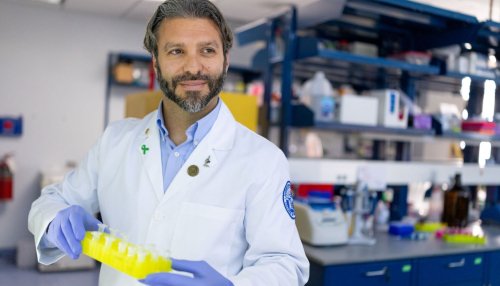
Marc H. Scheetz, Pharm.D., led research published in JAMA Network Open supporting guideline-recommended monitoring of vancomycin therapy in pediatric patients.
Children with serious bacterial infections often receive the powerful antibiotic vancomycin, but determining the right dose can be challenging. Too little medication may not effectively treat the infection, while too much can increase the risk of kidney damage.
Research led by Midwestern University faculty member Marc H. Scheetz, Pharm.D., M.Sc., FCCP, FCP, FIDSA, published today in JAMA Network Open, suggests that a commonly used method for monitoring vancomycin levels may not provide the most accurate picture of how much medication a child is actually receiving.
Better Monitoring for Better Care
The study, "Vancomycin Trough Concentrations and 24-Hour AUC Monitoring in Pediatric Patients," compared two approaches for monitoring vancomycin therapy. One measures the drug level at a single point in time, known as a trough concentration, while the other estimates a patient's total exposure to the medication over 24 hours, called the area under the curve (AUC).
Analyzing a large international pediatric dataset, the researchers found that trough measurements alone did not reliably identify whether children met recommended AUC targets. As a result, clinicians relying only on trough values may unnecessarily increase doses for patients who are already receiving appropriate treatment, potentially exposing them to a greater risk of kidney injury.
The research reinforces current clinical guidelines that recommend AUC-guided monitoring whenever feasible, helping clinicians optimize antibiotic therapy while minimizing potential toxicity.
Supporting Guideline-Recommended Practice
"Our findings show that relying on trough concentrations alone may not accurately reflect a child's overall vancomycin exposure," said Dr. Scheetz, Associate Dean of Research and Professor in the College of Pharmacy at Midwestern University. "When clinicians use AUC-guided monitoring, they can make more informed dosing decisions that better balance effectiveness and safety for pediatric patients. These results align with what we've previously observed in adult populations and further support broader adoption of guideline-recommended monitoring strategies."
Dr. Scheetz served as the study's senior and corresponding author and played a central role in the study's conception, statistical analysis, interpretation of findings, manuscript development, and clinical framing. Midwestern University’s Infectious Diseases Pharmacotherapy fellow, Justin Shiau, was the first author of the manuscript.
Research Leadership in Infectious Diseases
An internationally recognized expert in infectious diseases pharmacotherapy, Dr. Scheetz serves as Associate Dean of Research for Midwestern University's College of Pharmacy, Downers Grove, holds dual appointments as Professor in the College of Pharmacy and the College of Graduate Studies, and directs the University's Pharmacometrics Center of Excellence and maintains a clinical affiliation with Northwestern Memorial Hospital in Chicago, Illinois. He has authored more than 240 original research manuscripts and review articles focused on optimizing anti-infective drug therapy.
The publication highlights Midwestern University's ongoing commitment to advancing research that improves patient care while providing faculty opportunities to lead impactful collaborations addressing complex healthcare challenges.