
Doctor of Occupational Therapy, Glendale Campus
The Doctor of Occupational Therapy Program in Glendale, AZ trains you to see the whole person and to build the skills that help people live fuller, more independent lives.
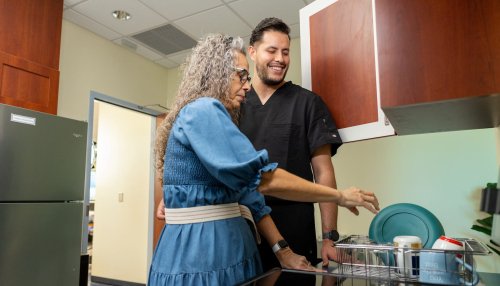
Program Overview for Proposed Doctor of Occupational Therapy (O.T.D.), Glendale
The proposed Occupational Therapy Program offers a curriculum leading to the Doctor of Occupational Therapy (O.T.D.) degree at the Glendale, AZ campus. This entry-level doctoral curriculum is designed to develop advanced clinical reasoning, leadership, scholarship, and professional skills that support the evolving needs of the profession The curriculum for the Doctor of Occupational Therapy degree is a full-time, 27-month continuous curriculum that includes 17 months of didactic education, 24 weeks of Level II fieldwork, and a mentored doctoral capstone experience and project.
- Estimated application start date: April 2027
- Expected program start date: Fall 2027
Curriculum Highlights
The curriculum integrates foundational sciences, occupational therapy theory, evidence-based practice, and experiential learning to prepare graduates for entry-level practice and lifelong professional development. Early clinical coursework prepares students for Level II fieldwork by developing foundational knowledge, clinical reasoning, and professional skills. The doctoral capstone includes a minimum 14-week individually mentored experience that allows students to develop advanced knowledge and skills in an area of focus, including clinical practice, research, administration, program development, policy, advocacy, education, or leadership. Midwestern University's healthcare environment provides opportunities for interprofessional education and collaboration, preparing students to work effectively as members of healthcare teams in support of client-centered care.
Accreditation
The entry-level occupational therapy doctoral degree program has applied for accreditation by the Accreditation Council for Occupational Therapy Education (ACOTE) of the American Occupational Therapy Association (AOTA), located at 7501 Wisconsin Avenue, Suite 510E, Bethesda, MD 20814. ACOTE’s telephone number c/o AOTA is 301-652-AOTA and its web address is www.acoteonline.org.
The program must be granted Candidacy Status, have a preaccreditation review, complete an on-site evaluation, and be granted Accreditation Status before its graduates will be eligible to sit for the national certification examination for the occupational therapist administered by the National Board for Certification in Occupational Therapy (NBCOT). After successful completion of this exam, the individual will be an Occupational Therapist, Registered (OTR). In addition, all states require licensure to practice; however, state licenses are usually based on the results of the NBCOT Certification Examination. Note that a felony conviction may affect a graduate’s ability to sit for the NBCOT certification examination or attain state licensure.
Students must complete 24 weeks of Level II fieldwork and an individual 14-week doctoral capstone experience within 12 months following completion of the didactic portion of the program. The doctoral capstone experience must begin after completion of all coursework and Level II fieldwork, as defined in the 2023 ACOTE OTD Standard D.1.3.
Learn More
Learn more about the requirements and find quick links to relevant catalog content to guide you in your application process.
Admissions Requirements
Individuals applying for admission to the College of Health Sciences Occupational Therapy Program must submit documentation for the following minimum requirements before the academic year commences for the incoming class.
- Completion of a baccalaureate degree from a regionally accredited college or university.
- A minimum cumulative undergraduate grade point average (GPA) of 3.0 on a 4.00 scale. Grades of C or better for prerequisite coursework.
- Completion of the minimum number of prerequisite courses in the prescribed subject areas at regionally accredited colleges or universities.
- Satisfaction of the standards set forth by the Admissions Committee (including documentation of academic and professional promise in the prospective student).
- Two letters of recommendation.
Application Process and Deadlines
Interested students are encouraged to apply for the M.O.T. program and contact the Office of Admissions at admissaz@midwestern.edu for more details.
Once the O.T.D. Program reaches candidacy status, applicants can apply to the program through OTCAS. Applicants should demonstrate evidence of community service or extracurricular activities. Applicants to the O.T.D. Program should also include a leadership statement or plan describing how they see their future activities as a leader in the profession.
Admissions decisions are made on a rolling basis. Students are advised to complete their application files as early as possible to ensure timely consideration.
Applicants are required to submit their applications to OTCAS by July 1st.
Prerequisite Courses
Students must complete these courses with a grade of C or better:
Course | Semester/Quarter Hours |
|---|---|
Human Anatomy1,2 | 3 Sem/4 Qtr hrs |
Physiology1 | 3 Sem/4 Qtr hrs |
Statistics or Research Methods | 3 Sem/4 Qtr hrs |
Lifespan Development | 3 Sem/4 Qtr hrs |
Abnormal Psychology | 3 Sem/4 Qtr hrs |
Other Social and Behavioral Science | 3 Sem/4 Qtr hrs |
1The Anatomy and Physiology requirements may also be fulfilled by taking Anatomy and Physiology I and Anatomy and Physiology II, as some universities offer combined courses.
2Human Anatomy must be completed successfully within 5 years of admission to the Program. The lab component with cadaver experience is strongly recommended.
Other courses in basic sciences, psychology, anthropology, math, human development, research, and human movement may be considered as alternates to the stated minimum prerequisites. The Occupational Therapy Program Admissions Committee will assess and determine if a candidate’s alternative coursework may meet the prerequisite requirements.
Tuition & Fees Information
The Glendale OTD 27-month program is anticipated to begin Fall 2027 and the estimated tuition is $122,747.25.
For detailed information about the total cost of attendance for all Midwestern University programs, visit the Cost of Attendance section on the Student Financial Services website. The total cost of attendance figures includes tuition/fees, estimates for books, supplies, and living expenses, etc.
Tuition rates are subject to change each academic year for all enrolled students. Visit the Tuition & Fees page for important information regarding tuition.
Visit the Leave of Absence, Withdrawal Notification, and Refund Policy page for the policy and procedure for leave of absence, withdrawal and refund.
For the Student Financial Services contact information, visit the Financial Aid page.
Unique funding opportunity: Midwestern University offers several financing options, including the MWU Loan. This is an excellent alternative or adjunct to Grad PLUS loans through the federal government. Student Financial Services provides information on this and several other loans available to students at Midwestern University.
Program Highlights
17-Month Didactic Coursework
- Clinical Skills Education Through Core Classes and Electives
- Our comprehensive curriculum exceeds accreditation requirements and provides unique opportunities for professional development, leadership, and advocacy. Threads for our coursework include courses in Aging, Neuro Rehabilitation, Pediatrics, Psychosocial and Mental Health, Evidence Based Practice Research, Critical Thinking, Leadership, Theory and Intervention courses.
- Course offerings include opportunities for unique and innovate areas of the profession, including:
- Upper Extremity Rehabilitation
- Orthotics and Physical Agent Modalities
- Assistive Technology
- Population Health and Emerging Practice
- Interprofessional Healthcare and Intervention
- Acute Care Rehabilitation and Neurorehabilitation
- Medical Spanish
- Sensory Integration
- Trauma Informed Care
- Pelvic Health
- Dementia Care
- Fieldwork experience conducted during didactic course consists of guided learning experiences in various health care and/or community settings that provides students with direct opportunities to observe and interact with clients engaged in functional living activities that are appropriate for their respective cognitive, psychosocial, and physical stage of development.
- Advanced fieldwork experiences involve work with clients who exhibit a variety of medical conditions, which include physical and/or psychosocial disabilities and emphasize the development of disciplined, higher-level critical thinking skills to plan and provide high quality client care. Students are supervised by registered occupational therapists with a minimum of one year of experience.
Unique Clinical Education Resources
- Therapy Institute
- The Midwestern University Therapy Institute offers comprehensive therapeutic care and opportunities for student observation and experience in one location. The 74,000 square foot state-of-the-art facility utilizes the latest technology, enabling us to deliver the highest quality patient-centered care. Working as a team, licensed University faculty and advanced students from the College of Health Sciences and the Arizona College of Optometry provide skilled, compassionate therapy services for patients of all ages and abilities.
- Services include:
- Clinical Psychology, Occupational Therapy, Physical Therapy, Speech-Language Pathology, Acquired Brain Injury (ABI), Low Vision Rehabilitation, Sports Vision Performance and Rehabilitation, and Vision Therapy
- The Therapy Institute also houses a CAREN (Computer Assisted Rehabilitation Environment) virtual reality system for advanced clinical evaluation, analysis, and rehabilitation. Midwestern University’s CAREN system is one of only twelve in the United States.
- Integrated Healthcare and Interdisciplinary Opportunities
- Our unique One Health Initiative promotes interdisciplinary education and patient care; students interact with professionals across healthcare disciplines including family medicine, optometry, pharmacy, podiatry, public health, psychology, physical therapy, speech language pathology, and others.
- State-of-the-Art OT Lab Facilities
- Clinical Skills and Simulation Center
- Midwestern University OT students participate in high-fidelity, high-technology simulation during the didactic portion of their education. High-fidelity, high-technology simulation can affect clinical practice performance*, and our Clinical Skills and Simulation Center has 19 hospital simulation rooms that are equipped with tools and supplies found in outpatient clinical settings. This experience allows our students the opportunity to:
- Apply knowledge gained in the classroom to real-life situations.
- Develop skills in history-taking, patient evaluations and patient education, and communication through practical experience.
- Work with patient actors to practice establishing a caring, trusting, and positive patient-provider relationship.
- Midwestern University OT students participate in high-fidelity, high-technology simulation during the didactic portion of their education. High-fidelity, high-technology simulation can affect clinical practice performance*, and our Clinical Skills and Simulation Center has 19 hospital simulation rooms that are equipped with tools and supplies found in outpatient clinical settings. This experience allows our students the opportunity to:
University, College, and Community-Based Service Opportunities
- Students in our program participate in a variety of service activities. Some of the organized clubs and activities include SOTA (the Student Occupational Therapy Association), H.O.M.E. (Health Outreach through Medicine and Education), SGA Student Government Association, the Collaborative Care Club (Interprofessional Medical Care student organization), and service to many other community-related programs.
Graduation and Pass Rates
Graduation Rates
Graduation rates will be updated after the first O.T.D cohort graduates in 2030.
NBCOT Exam Passing Rates
Visit the NBCOT School Performance page for passing percentage rates by school.
Please note that NBCOT scores for graduates from the O.T.D. program will not be available until after the first cohort graduates in 2030.